Maya is a 29-year-old freelance photographer earning $38,000 a year in net self-employment income, shooting weddings and small-business headshots. Like a lot of self-employed people, she'd heard that Social Security Disability Insurance would step in if she ever couldn't work — so private disability insurance always felt like a "someday" purchase. When she actually ran her numbers, the gap between what she assumed and what she'd really receive was over $1,300 a month.
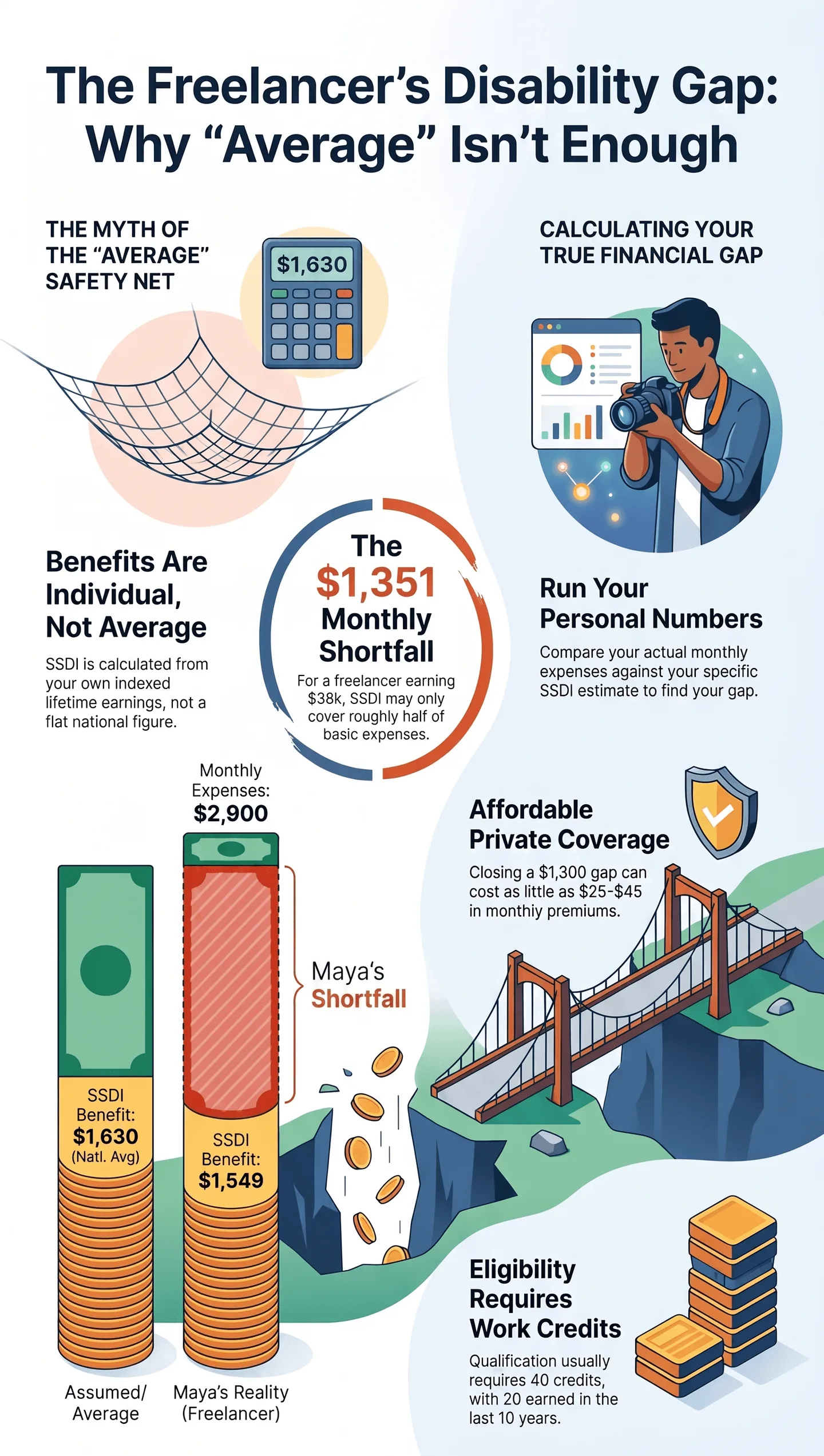
What She Assumed vs. What's Actually True
The number Maya had in her head — somewhere around "half your income, roughly" — was based on a vague sense of the national average SSDI benefit, which sits at approximately $1,630 a month. What she hadn't accounted for is that SSDI benefits are calculated from your own earnings history, not a flat national figure. Someone earning $38,000 a year doesn't receive the same benefit as someone earning $90,000 a year — the benefit scales with what you've actually paid into the system.
At her income level, her realistic estimated SSDI benefit is closer to $1,549 a month — not far off the average in her case, but for a freelancer earning less, the gap between the "average" figure and their real number can be considerably wider.
Running Her Real Numbers
Maya's actual monthly expenses — rent, food, health insurance, equipment financing — come to roughly $2,900 a month. Against an estimated SSDI benefit of $1,549, that leaves a monthly shortfall of:
The Full Math
- Annual net income: $38,000
- Monthly income: approximately $3,167
- Monthly expenses: $2,900
- Estimated SSDI benefit if unable to work: approximately $1,549/month
- Monthly gap if she couldn't work at all: approximately $1,351
- Estimated private policy needed to close the gap: roughly $350–$670/month in benefit
- Approximate premium for a policy that size: in the range of $25–$45/month, though actual quotes vary by insurer, age, and occupation class
Why the "Average" Number Is Misleading for Lower Earners
SSDI is often discussed using the national average benefit, which is a reasonable shorthand for someone earning close to the median income — but it understates the picture for higher earners and, more relevant here, it can overstate what a lower-earning freelancer or gig worker would actually receive. The benefit calculation is based on your indexed lifetime earnings, so a lower and more recent earnings history produces a lower estimated benefit, not the flat "average" figure people tend to repeat.
This matters most for people earlier in their freelance career, or anyone whose self-employment income is meaningfully below the national median — exactly the group most likely to assume the safety net is bigger than it is.
What This Isn't
This isn't a reason to panic, and it isn't an argument that everyone needs a large disability policy immediately. Maya's gap is real but modest, and for some freelancers just starting out, building a larger emergency fund first may make more sense than a policy premium before income stabilizes. What this case does show is that "I'll rely on Social Security" is a specific, calculable number — not a vague safety net — and it's worth knowing your actual figure rather than an averaged one before deciding whether or how much private coverage makes sense.
Check Your Own Number
SSDI estimates scale with your actual income, not a flat average — which means the gap looks different for everyone. Run your own income and expenses through our Disability Insurance Calculator to see your estimated SSDI benefit and gap, rather than relying on a rule of thumb that may not apply to your income level.
Frequently Asked Questions
Is the national average SSDI benefit a good estimate for anyone? It's a reasonable rough estimate for someone earning close to the national median income, but it can overstate the benefit for lower earners and understate it for higher earners, since SSDI is calculated from your own indexed earnings history, not a flat figure.
Do self-employed people even qualify for SSDI? Generally yes, as long as you've paid self-employment tax (Social Security and Medicare) for enough of the required work credits — typically 40 credits, with at least 20 earned in the last 10 years for most adults, though the exact requirement varies by age.
How much private disability insurance do I actually need? It depends on your income, expenses, and estimated SSDI benefit — the goal is usually to cover the gap between what Social Security would pay and what you'd actually need to cover your expenses, not to replace 100% of your income.
Is disability insurance worth it for a lower-income freelancer? It depends on your financial cushion and risk tolerance. Some freelancers early in their career prioritize building an emergency fund first; others prefer the certainty of a policy. Running your actual gap number, rather than guessing, is the useful first step either way.